
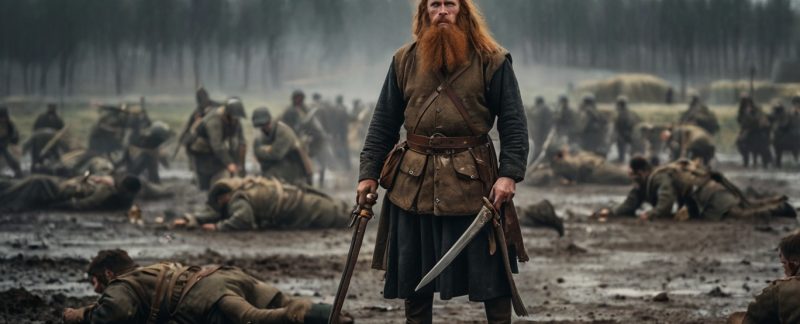
Brian Boru, one of Ireland’s most revered historical figures, rose to prominence as a warrior king during the 10th century. His reign marked a significant turning point in Irish history, showcasing the internal conflicts and external threats of the era. Brian’s ambition drove him to unite feuding tribes and assert his dominance over rival kings, transforming him into the most powerful monarch of his time. His military genius came to the forefront during numerous campaigns against Viking invaders, reflecting his commitment to protecting Ireland. As a leader, he was both formidable and strategic, successfully forging powerful alliances. The culminating point of his career came at the Battle of Clontarf, where his forces triumphed against overwhelming odds. This victory not only solidified his status but also reshaped the future of Ireland.
Despite his military successes, Brian Boru’s life was not without personal loss and hardship. He faced many challenges, including betrayals from allies and the ongoing threat of Viking raids. Nevertheless, his resolve remained unwavering as he sought to bring peace and stability to Ireland. His vision extended beyond the battlefield; he was also a patron of the arts and culture during a time when Ireland was rich in literary and religious heritage. This dual focus on martial prowess and cultural patronage made his reign exceptionally notable. Brian’s legacy would endure long after his death, becoming a symbol of national pride and unity. His story serves as a reminder of the complexities and triumphs of Irish history.
The impact of Brian Boru extends well into subsequent generations, with his influence felt across Irish culture. His legacy as a unifier of the clans and a defender against foreign domination has inspired many nationalist movements throughout the centuries. The narrative of his life has been recounted in poetry, song, and folklore, establishing him as an iconic figure of Irish heritage. Furthermore, monuments and historical sites commemorating his achievements can be found throughout Ireland, illustrating his lasting significance. Brian’s name remains synonymous with leadership and resilience, specifically in the face of adversity. He is celebrated not only for his military acumen but also for fostering a sense of Irish identity. Thus, Brian Boru’s contributions went beyond war; they laid the foundation for a unified Ireland.
Family Background
Brian Boru was born into a notable family with deep-rooted connections to the Irish aristocracy. His father, Cennétig mac Lorcáin, served as a regional king, which placed Brian in the midst of the tribal conflicts of his time. Growing up, Brian was exposed to warfare and leadership from an early age, influences that shaped his future endeavors. The challenges faced by his family, including rival factions, forced him to develop strategies to protect his kin. Additionally, his mother’s lineage also contributed to his significant status in society, enriching his claim to leadership. His upbringing instilled a sense of resilience and ambition that propelled him toward greatness. Thus, his rich family background provided both the foundation and the impetus for his legendary achievements.
The blend of warfare, culture, and leadership in Brian Boru’s life presents a compelling narrative that transcends time. His journey from local lord to High King encapsulates the struggles and aspirations of the Irish people during a tumultuous era. Each campaign he led was not only a contest of arms but also a testament to his vision for a unified Ireland. The legacy he left behind continues to resonate, reminding successive generations of the importance of unity in adversity. His approach to governance, which integrated military skill with cultural patronage, proves that leaders can shape their nations beyond the battlefield. In reflecting on his life, we see a legacy rich with lessons in resilience and strategic thinking. Ultimately, Brian Boru remains an indelible figure in Irish history.
Dynasty and Rise to Power
Brian Boru belonged to the Dál Cais dynasty, which was originally based in the region of Thomond. This lineage gained prominence due to their strategic marriages and alliances within the Gaelic nobility. Early in his life, Brian displayed remarkable skills as a warrior and a leader, characteristics that would later define his historical legacy. His rise to power was marked by a series of calculated moves against rival clans, showcasing both political and military intelligence. As he strengthened his influence, he formed powerful alliances, which further solidified the Dál Cais position in Irish politics. Brian’s ascendancy culminated in his coronation as High King of Ireland, making him a central figure in the struggle for control over the island. His dynasty’s impact on Ireland would resonate for many generations, influencing both culture and governance.
The blend of warfare, culture, and leadership in Brian Boru’s life presents a compelling narrative that transcends time. His journey from local lord to High King encapsulates the struggles and aspirations of the Irish people during a tumultuous era. Each campaign he led was not only a contest of arms but also a testament to his vision for a unified Ireland. The legacy he left behind continues to resonate, reminding successive generations of the importance of unity in adversity. His approach to governance, which integrated military skill with cultural patronage, proves that leaders can shape their nations beyond the battlefield. In reflecting on his life, we see a legacy rich with lessons in resilience and strategic thinking. Ultimately, Brian Boru remains an indelible figure in Irish history.
Military Campaigns
Throughout his reign, Brian Boru engaged in numerous campaigns to consolidate power and secure his realm. He effectively unified the various warring tribes of Ireland under his banner, aiming to establish a single kingdom. One of his most notable military endeavors was against the Viking forces, which were a major threat during his time. These campaigns not only showcased his strategic acumen but also bolstered his reputation as a formidable leader. In addition to repelling invasions, Brian sought to extend his territory through a series of tactical battles. His campaigns culminated in the decisive Battle of Clontarf, where he faced a combined force of Vikings and their allies. This battle was pivotal, as it not only ended Viking supremacy in Ireland but also marked the zenith of Brian’s military prowess.
The blend of warfare, culture, and leadership in Brian Boru’s life presents a compelling narrative that transcends time. His journey from local lord to High King encapsulates the struggles and aspirations of the Irish people during a tumultuous era. Each campaign he led was not only a contest of arms but also a testament to his vision for a unified Ireland. The legacy he left behind continues to resonate, reminding successive generations of the importance of unity in adversity. His approach to governance, which integrated military skill with cultural patronage, proves that leaders can shape their nations beyond the battlefield. In reflecting on his life, we see a legacy rich with lessons in resilience and strategic thinking. Ultimately, Brian Boru remains an indelible figure in Irish history.
Main Battle
The Battle of Clontarf, fought on April 23, 1014, marks the pinnacle of Brian Boru’s military achievements. It was a decisive conflict against a coalition of Viking forces and their Irish allies, significantly influencing the course of Irish history. Brian’s strategic planning and execution during the battle demonstrated exceptional leadership under pressure. Engaging with approximately 10,000 troops, the battlefield was a fierce and chaotic environment where bravery and skill were paramount. Despite suffering heavy losses, Brian’s forces ultimately triumphed, ensuring the decline of Viking influence in Ireland. This victory solidified Brian’s status as a national hero while symbolizing the fierce resistance against foreign invaders. Over time, Clontarf would be remembered not only for the battle itself but also for the ideals of unity and resilience his forces represented.
The blend of warfare, culture, and leadership in Brian Boru’s life presents a compelling narrative that transcends time. His journey from local lord to High King encapsulates the struggles and aspirations of the Irish people during a tumultuous era. Each campaign he led was not only a contest of arms but also a testament to his vision for a unified Ireland. The legacy he left behind continues to resonate, reminding successive generations of the importance of unity in adversity. His approach to governance, which integrated military skill with cultural patronage, proves that leaders can shape their nations beyond the battlefield. In reflecting on his life, we see a legacy rich with lessons in resilience and strategic thinking. Ultimately, Brian Boru remains an indelible figure in Irish history.
Legacy
Brian Boru’s legacy is multifaceted, intertwining cultural, political, and military threads that define his historical significance. Revered as a national hero, his efforts helped pave the way for a more unified Ireland, free from external oppressors. His victory at the Battle of Clontarf stands as a testament to his indomitable spirit and tactics, which reshaped the power dynamics in the region. Furthermore, Brian’s leadership laid the groundwork for subsequent Irish kings and leaders, influencing their governance and cultural approaches. His contributions to the arts and religion during the medieval period heralded a flourishing of Irish culture. Even centuries later, songs, legends, and stories chronicling his deeds continue to inspire pride in Irish heritage. Thus, Brian Boru’s enduring impact is felt in the hearts and minds of many, echoing through time.
The blend of warfare, culture, and leadership in Brian Boru’s life presents a compelling narrative that transcends time. His journey from local lord to High King encapsulates the struggles and aspirations of the Irish people during a tumultuous era. Each campaign he led was not only a contest of arms but also a testament to his vision for a unified Ireland. The legacy he left behind continues to resonate, reminding successive generations of the importance of unity in adversity. His approach to governance, which integrated military skill with cultural patronage, proves that leaders can shape their nations beyond the battlefield. In reflecting on his life, we see a legacy rich with lessons in resilience and strategic thinking. Ultimately, Brian Boru remains an indelible figure in Irish history.
Burial and Death
Brian Boru was laid to rest at Ardcroney, a site near his stronghold in Killaloe, County Clare. His final resting place has become a site of reverence among many followers and descendants who still honor his legacy. The burial was conducted with great solemnity, reflecting his status as a king and a warrior. Various historical accounts indicate that many mourned his death deeply, recognizing his contributions to the nation. A monumental stone was erected at the site to commemorate his achievements and to provide a lasting tribute to his reign. Over the years, this location has attracted visitors who seek to pay their respects. As a significant historical figure, Brian’s burial site remains steeped in myth and lore, capturing the imagination of those who learn about him.
The blend of warfare, culture, and leadership in Brian Boru’s life presents a compelling narrative that transcends time. His journey from local lord to High King encapsulates the struggles and aspirations of the Irish people during a tumultuous era. Each campaign he led was not only a contest of arms but also a testament to his vision for a unified Ireland. The legacy he left behind continues to resonate, reminding successive generations of the importance of unity in adversity. His approach to governance, which integrated military skill with cultural patronage, proves that leaders can shape their nations beyond the battlefield. In reflecting on his life, we see a legacy rich with lessons in resilience and strategic thinking. Ultimately, Brian Boru remains an indelible figure in Irish history.
Related Clan
The descendants of Brian Boru are associated with several clans, primarily the Dál Cais lineage, which maintained prominence long after his reign. His sons, notably Murchad and Tadc, carried on his legacy, governing regions and influencing their respective clans. Over the centuries, the Boru legacy intertwined with other noble families, creating a complex web of descendants throughout Ireland. The clan’s identity and values were rooted in Brian’s teachings, emphasizing unity and cooperation. Furthermore, many individuals within these clans emerged as notable figures in Irish history, continuing his fight for sovereignty. The continued recognition of Brian’s descendants serves as a reminder of his enduring influence. Their stories contribute richly to the tapestry of Ireland’s historical narrative.
References
External Reference:
Learn more about ’s life and impact here
Internal Reference:
Learn more about Ancient Irish Warriors here