
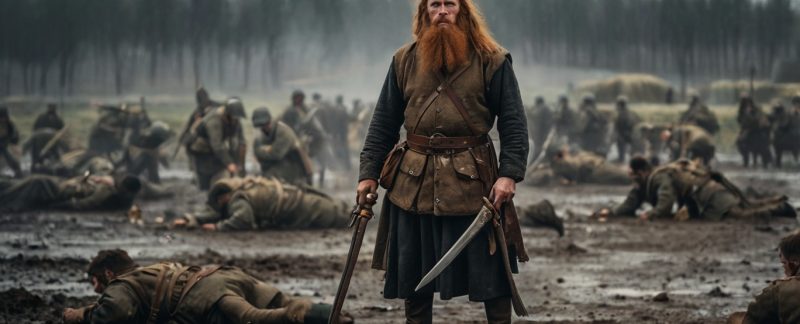
The Enduring Legacy of Brian Boru
Brian Boru, a significant figure in Irish history, emerged as a leader during a tumultuous period in the early medieval era. He is best known for his role as the High King of Ireland and his victories against Viking invasions. Brian Boru’s reign marked a pivotal moment in Irish history as he unified various clans under his leadership. His conflict with the Vikings culminated in the famous Battle of Clontarf, which solidified his legacy as a national hero.
Rising from a background of noble lineage, Brian Boru quickly established himself as a powerful warrior and a cunning ruler. His ascent to the throne was not without challenges, facing opposition from rival clans and external enemies alike. Throughout his life, he was driven by a vision of a unified Ireland, free from Viking control. His diplomatic skills and military prowess helped him forge alliances that would be crucial for his later successes.
The Battle of Clontarf in 1014 stands as a testament to Brian Boru’s determination and military strategy. On that day, against overwhelming odds, his forces faced the Viking coalition led by Brian’s own estranged family members. The battle was fierce, with significant casualties on both sides. Ultimately, Brian’s forces emerged victorious, reclaiming much of Ireland from Scandinavian influence and ensuring his place in the annals of history.
Family Background
Brian Boru was born into the Dál gCais dynasty, which was a notable family in early medieval Ireland. His father was Marcan, a chieftain of the Dál gCais. Brian’s background provided him with both the resources and the political connections necessary to rise through the ranks of local leadership. His early life was marked by a series of conflicts with neighboring clans, contributing to his development as a formidable strategist and leader.
Despite his significant achievements, Brian Boru’s reign was marked by tumult and betrayal. In the years following Clontarf, political rivalries persisted, which would ultimately contribute to his downfall. The unity he had fought so hard to establish began to fray as rival factions sought power. The assassination of Brian at the hands of a rival clan in 1014 ended a tumultuous reign, but his impact on Irish history was indelible.
Dynasty and Rise to Power
Dál gCais
Despite his significant achievements, Brian Boru’s reign was marked by tumult and betrayal. In the years following Clontarf, political rivalries persisted, which would ultimately contribute to his downfall. The unity he had fought so hard to establish began to fray as rival factions sought power. The assassination of Brian at the hands of a rival clan in 1014 ended a tumultuous reign, but his impact on Irish history was indelible.
Military Campaigns
Battle of Clontarf, various campaigns against the Vikings
Despite his significant achievements, Brian Boru’s reign was marked by tumult and betrayal. In the years following Clontarf, political rivalries persisted, which would ultimately contribute to his downfall. The unity he had fought so hard to establish began to fray as rival factions sought power. The assassination of Brian at the hands of a rival clan in 1014 ended a tumultuous reign, but his impact on Irish history was indelible.
Main Battle
Battle of Clontarf
Despite his significant achievements, Brian Boru’s reign was marked by tumult and betrayal. In the years following Clontarf, political rivalries persisted, which would ultimately contribute to his downfall. The unity he had fought so hard to establish began to fray as rival factions sought power. The assassination of Brian at the hands of a rival clan in 1014 ended a tumultuous reign, but his impact on Irish history was indelible.
Legacy
Brian Boru’s legacy continues to be celebrated across Ireland, symbolizing resistance and unity. His efforts to unify the clans of Ireland set the stage for future generations of leaders. As a cultural icon, he is frequently referenced in literature, music, and folklore. His victory at Clontarf is viewed as a defining moment that laid the groundwork for contemporary Irish identity, representing the struggle for independence and cultural pride.
Despite his significant achievements, Brian Boru’s reign was marked by tumult and betrayal. In the years following Clontarf, political rivalries persisted, which would ultimately contribute to his downfall. The unity he had fought so hard to establish began to fray as rival factions sought power. The assassination of Brian at the hands of a rival clan in 1014 ended a tumultuous reign, but his impact on Irish history was indelible.
Burial and Death
Armagh, Ireland
Despite his significant achievements, Brian Boru’s reign was marked by tumult and betrayal. In the years following Clontarf, political rivalries persisted, which would ultimately contribute to his downfall. The unity he had fought so hard to establish began to fray as rival factions sought power. The assassination of Brian at the hands of a rival clan in 1014 ended a tumultuous reign, but his impact on Irish history was indelible.
Related Clan
Dál gCais
References
External:
Wikipedia
Internal:
brian-boru-overview
Summary
Brian Boru remains a central figure in Irish history, renowned for his leadership and military acumen. His efforts to unify the Irish clans against Viking incursions were groundbreaking and established him as a national figure. The legacy of Brian Boru as a symbol of strength and unity endures, influencing Irish culture to this day. His story is a powerful reminder of the bravery and resilience that characterized this pivotal period in Ireland’s past.