
The Life and Legacy of Brian Boru
Brian Boru was an influential Irish king who played a pivotal role in the history of Ireland during the 10th century. His desire to unite the warring clans of Ireland led him to become the High King, a significant title with tremendous influence and authority. Under his reign, he faced formidable foes, particularly the Vikings, who threatened the stability of his kingdom and culture. Brian’s strategic prowess and leadership allowed him to lay the foundation for a united Ireland. This monumental task was herculean, as rivalries were entrenched between numerous clans, each vying for their own power and territory in Ireland. Nevertheless, his commitment to this unification would ultimately define his legacy and strengthen the Irish identity and culture against foreign invaders. Brian’s remarkable journey from a local king to High King remains an inspiring tale in Irish history, demonstrating the potential of strong leadership to overcome adversity and unite disparate factions. He is still celebrated for his contributions and the cultural renaissance that followed.
Born in the late 10th century, Brian Boru emerged as a leader during a crucial era for Ireland. His childhood was marked by the ongoing Viking invasions, which shaped his worldview and ambitions. He built alliances with neighboring clans, uniting them against the common enemy. Consequently, his rule began to inspire a new era of Irish nationalism as he sought to reclaim sovereignty from external influences. Brian’s journey was not just about warfare; it was also about cultural revival and unification. Understanding the intricacies of politics and warfare allowed him to establish a solid foundation for his dynasty. His remarkable achievements ushered in a period of glory and cultural enrichment that would resonate for generations. As a result, Brian Boru became a symbol of resilience and national pride within Ireland, embodying the spirit of unity and defiance. This was crucial in establishing his future role as a unifier and a champion of the Irish people.
Brian Boru’s reign was characterized by relentless tension and military engagements with Viking clans and rival Irish kings. His ascension as High King marked a monumental shift in Irish history, as he sought to consolidate power and unify the Irish people against foreign oppressors. While facing numerous challenges, Brian excelled in forming strategic alliances that bore fruit in numerous battles across the region. His victory at the Battle of Clontarf is one of his most renowned achievements, showcasing his tactical brilliance and leadership. Furthermore, his commitment to fostering a sense of Irish identity transcended mere warfare, establishing a legacy rooted in culture and unity. As conflicts with the Vikings waned, Brian’s influence began to spread throughout the whole of Ireland, instilling hope for a united future. Thus, the enduring narrative of Brian Boru serves not only as a tale of battles fought but also as an inspiration for unity among the Irish clans for centuries.
Family Background
Brian Boru was born into the Dál Cais dynasty in the late 10th century, in modern-day County Clare, Ireland, to a noble family. His father was Cennétig, a chieftain and leader over a small kingdom, which provided the foundation for Brian’s future conquests. Despite the pressures of Viking incursions, his mother raised him with a strong focus on education and leadership. This foundation paved the way for his ascension, as he learned the language and customs of the Norse people that plagued his lands. Thus, his upbringing included both military and diplomatic training vital for the turbulent times in which he lived, preparing him to unite the various Irish clans under his leadership. His lineage granted him not just royal blood, but also a unique perspective on both internal and external conflicts. Brian’s familial ties also provided him allies critical for his ascent in power as he ascended against external threats.
Brian Boru’s campaigns were characterized by strategic brilliance and political acumen as he conquered rival clans and solidified his reign. His military endeavors were driven by the overarching aim of uniting Ireland against external threats, particularly the Viking invaders who sought to dominate his lands. Transitioning from local leader to the High King, he faced numerous challenges along the way. The meticulous planning of each campaign exemplified his leadership and ability to adapt to changing circumstances. Additionally, forging alliances with other clans increased his military strength and solidified his authority against enemies. The outcome of these battles ultimately led to the establishment of a centralized power structure that resonated throughout the region for years. Furthermore, his military legacy is commemorated in Irish cultural narratives as evidence of the enduring spirit of the Irish people. Brian Boru’s military skill and foresight were instrumental in creating a legacy that transformed Irish society for generations to come.
Dynasty and Rise to Power
He belonged to the Dál Cais dynasty, a prominent royal house in Munster known for its fierce warriors and leaders.
Brian Boru’s campaigns were characterized by strategic brilliance and political acumen as he conquered rival clans and solidified his reign. His military endeavors were driven by the overarching aim of uniting Ireland against external threats, particularly the Viking invaders who sought to dominate his lands. Transitioning from local leader to the High King, he faced numerous challenges along the way. The meticulous planning of each campaign exemplified his leadership and ability to adapt to changing circumstances. Additionally, forging alliances with other clans increased his military strength and solidified his authority against enemies. The outcome of these battles ultimately led to the establishment of a centralized power structure that resonated throughout the region for years. Furthermore, his military legacy is commemorated in Irish cultural narratives as evidence of the enduring spirit of the Irish people. Brian Boru’s military skill and foresight were instrumental in creating a legacy that transformed Irish society for generations to come.
Military Campaigns
Throughout his reign, Brian Boru led significant military campaigns against Viking invaders and rival Irish chieftains to consolidate his authority.
Brian Boru’s campaigns were characterized by strategic brilliance and political acumen as he conquered rival clans and solidified his reign. His military endeavors were driven by the overarching aim of uniting Ireland against external threats, particularly the Viking invaders who sought to dominate his lands. Transitioning from local leader to the High King, he faced numerous challenges along the way. The meticulous planning of each campaign exemplified his leadership and ability to adapt to changing circumstances. Additionally, forging alliances with other clans increased his military strength and solidified his authority against enemies. The outcome of these battles ultimately led to the establishment of a centralized power structure that resonated throughout the region for years. Furthermore, his military legacy is commemorated in Irish cultural narratives as evidence of the enduring spirit of the Irish people. Brian Boru’s military skill and foresight were instrumental in creating a legacy that transformed Irish society for generations to come.
Main Battle
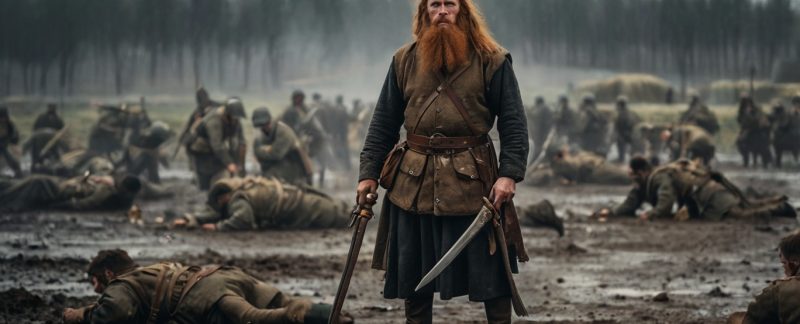
The Battle of Clontarf, fought on April 23, 1014, marked a significant turning point in Brian Boru’s campaign against Viking invaders. This pivotal conflict took place on the shores of Dublin Bay and included the forces of Brian Boru and his allies fighting against the Viking coalition. Transitioning into the battle, Brian strategized with his commanders, ensuring that his troops were adequately prepared to face the numerically superior Viking forces. As the battle commenced, fierce fighting erupted, with heroic deeds celebrated in ancient texts and poems. Brian’s forces initially gained the upper hand, causing significant Viking casualties and disrupting their lines. However, as the battle raged, Brian himself was tragically killed, leading to a vacuum of leadership on the battlefield. Nevertheless, his forces emerged victorious, effectively eliminating Viking power in Ireland for generations. This iconic battle not only symbolized the success of Irish resistance but also solidified Brian’s place in the annals of history as a national hero, inspiring countless generations.
Brian Boru’s campaigns were characterized by strategic brilliance and political acumen as he conquered rival clans and solidified his reign. His military endeavors were driven by the overarching aim of uniting Ireland against external threats, particularly the Viking invaders who sought to dominate his lands. Transitioning from local leader to the High King, he faced numerous challenges along the way. The meticulous planning of each campaign exemplified his leadership and ability to adapt to changing circumstances. Additionally, forging alliances with other clans increased his military strength and solidified his authority against enemies. The outcome of these battles ultimately led to the establishment of a centralized power structure that resonated throughout the region for years. Furthermore, his military legacy is commemorated in Irish cultural narratives as evidence of the enduring spirit of the Irish people. Brian Boru’s military skill and foresight were instrumental in creating a legacy that transformed Irish society for generations to come.
Legacy
Brian Boru’s legacy remains significant in Irish history, symbolizing resistance against oppression and the eventual unification of Ireland. His strategic victories laid the groundwork for a renewed sense of national identity, inspiring numerous leaders who came after him. The Battle of Clontarf, which saw the defeat of Viking forces, is often cited as pivotal in shaping Ireland’s destiny. Subsequently, his descendants continued his mission, advocating for unity and strength against invaders. Brian’s reign marked a cultural renaissance, as arts and literature flourished in the wake of his success. Consequently, he became a legendary figure, celebrated in folklore and history alike. Monuments and memorials in Ireland serve as reminders of his profound influence, while modern interpretations of his life reflect contemporary values of unity and resilience. His story emphasizes the importance of leadership, sacrifice, and the enduring spirit of a people, making Brian Boru an everlasting symbol of pride for the Irish.
Brian Boru’s campaigns were characterized by strategic brilliance and political acumen as he conquered rival clans and solidified his reign. His military endeavors were driven by the overarching aim of uniting Ireland against external threats, particularly the Viking invaders who sought to dominate his lands. Transitioning from local leader to the High King, he faced numerous challenges along the way. The meticulous planning of each campaign exemplified his leadership and ability to adapt to changing circumstances. Additionally, forging alliances with other clans increased his military strength and solidified his authority against enemies. The outcome of these battles ultimately led to the establishment of a centralized power structure that resonated throughout the region for years. Furthermore, his military legacy is commemorated in Irish cultural narratives as evidence of the enduring spirit of the Irish people. Brian Boru’s military skill and foresight were instrumental in creating a legacy that transformed Irish society for generations to come.
Burial and Death
Brian Boru was buried at the church of Armagh, a site of great significance to Irish history and Christianity.
Brian Boru’s campaigns were characterized by strategic brilliance and political acumen as he conquered rival clans and solidified his reign. His military endeavors were driven by the overarching aim of uniting Ireland against external threats, particularly the Viking invaders who sought to dominate his lands. Transitioning from local leader to the High King, he faced numerous challenges along the way. The meticulous planning of each campaign exemplified his leadership and ability to adapt to changing circumstances. Additionally, forging alliances with other clans increased his military strength and solidified his authority against enemies. The outcome of these battles ultimately led to the establishment of a centralized power structure that resonated throughout the region for years. Furthermore, his military legacy is commemorated in Irish cultural narratives as evidence of the enduring spirit of the Irish people. Brian Boru’s military skill and foresight were instrumental in creating a legacy that transformed Irish society for generations to come.
Related Clan
Brian Boru’s connection with the Dál Cais clan played a crucial role in his rise to power and subsequent achievements. Their support and loyalty were instrumental during his military campaigns, especially while facing Viking forces. In contrast, rival clans were often at odds with the Dál Cais, highlighting the political landscape of the time. Through strategic marriages and alliances, Brian strengthened ties with neighboring clans, building a network that would support his unification efforts. Ultimately, the Dál Cais clan became synonymous with his achievements and legacy, representing an enduring symbol of Irish unity and resistance against foreign oppression. Their heritage continues to be celebrated in various cultural expressions across Ireland today.
References
External:
More about Brian Boru can be found here.
Internal:
Learn more about Brian Boru’s life and impact here.
Summary
Brian Boru’s life encapsulated the essence of leadership during one of Ireland’s most turbulent periods, marked by Viking invasions. His early background, military campaigns, and consolidation of power against rival clans showcased his exceptional abilities. The pivotal Battle of Clontarf highlighted his strategic foresight and cemented his legacy as a national hero. Through his accomplishments, he inspired future generations to strive for unity, resilience, and national pride against adversity. His contributions to Irish culture and identity remain significant, enduring well beyond his lifetime. Ultimately, the legacy of Brian Boru demonstrates how powerful leadership can indelibly shape a nation’s history and ensure the continuity of cultural heritage.