
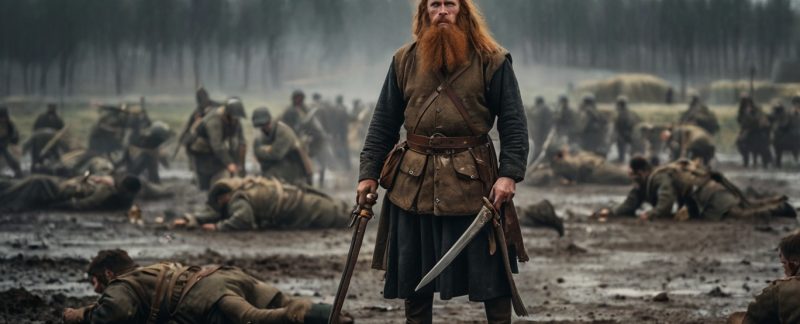
The Life and Legacy of Brian Boru
Brian Boru, a pivotal figure in Irish history, rose to notable prominence as a formidable king in the early 11th century. His leadership marked a significant shift in the landscape of Irish politics and culture.
Born into the Dál Cais dynasty, he sought to unify Ireland under a single, powerful ruler. His military expertise and strategic alliances played key roles in achieving these ambitious goals throughout his reign.
Despite the turbulent times, Brian’s vision for a unified Ireland was a driving force in his life. His legacy remains significant, illustrating the complexities and challenges of leadership in medieval Ireland.
Family Background
Brian Boru was born into a noble family in 941, son of Cennétig mac Lorcáin, a regional king. His lineage provided him with essential resources and alliances that facilitated his future conquests.
Throughout his life, Brian Boru demonstrated remarkable resilience and tactical acumen. His ability to navigate complex political landscapes distinguished him as a leader, commanding respect and loyalty from his followers.
Dynasty and Rise to Power
Brian Boru belonged to the Dál Cais dynasty, a royal lineage from the province of Munster. This family had a longstanding reputation for leadership and military prowess, which significantly shaped Brian’s political ambitions.
Throughout his life, Brian Boru demonstrated remarkable resilience and tactical acumen. His ability to navigate complex political landscapes distinguished him as a leader, commanding respect and loyalty from his followers.
Military Campaigns
Brian Boru’s military campaigns were aimed primarily at unifying Ireland under his rule. He successfully engaged in battles against several rival clans, including the O’Neill dynasty, which were crucial to his rise to power.
Throughout his life, Brian Boru demonstrated remarkable resilience and tactical acumen. His ability to navigate complex political landscapes distinguished him as a leader, commanding respect and loyalty from his followers.
Main Battle
The most notable conflict during Brian Boru’s reign was the Battle of Clontarf, fought on April 23, 1014. This decisive battle pitted Brian’s forces against a coalition of Irish and Viking warriors, ultimately determining the future of Ireland.
Throughout his life, Brian Boru demonstrated remarkable resilience and tactical acumen. His ability to navigate complex political landscapes distinguished him as a leader, commanding respect and loyalty from his followers.
Legacy
Brian Boru’s legacy is profound, as he is often celebrated as a national hero in Irish history. His achievements laid the foundation for future kings and inspired generations to strive for unification and independence.
Throughout his life, Brian Boru demonstrated remarkable resilience and tactical acumen. His ability to navigate complex political landscapes distinguished him as a leader, commanding respect and loyalty from his followers.
Burial and Death
Brian Boru was buried at the Church of the Holy Trinity in Armagh, a significant site in Irish history, after his death in 1014. This location was chosen to symbolize his status and connection with the Church of Ireland.
Throughout his life, Brian Boru demonstrated remarkable resilience and tactical acumen. His ability to navigate complex political landscapes distinguished him as a leader, commanding respect and loyalty from his followers.
Related Clan
The O’Brien clan, descended from Brian Boru, played a significant role in Irish nobility. This lineage continued to influence politics and culture in Ireland long after Brian’s time, ensuring his legacy endured.
References
External Reference:
Learn more about The Life and Legacy of Brian Boru’s life and impact here
Internal Reference:
Learn more about Ancient Irish Warriors here